


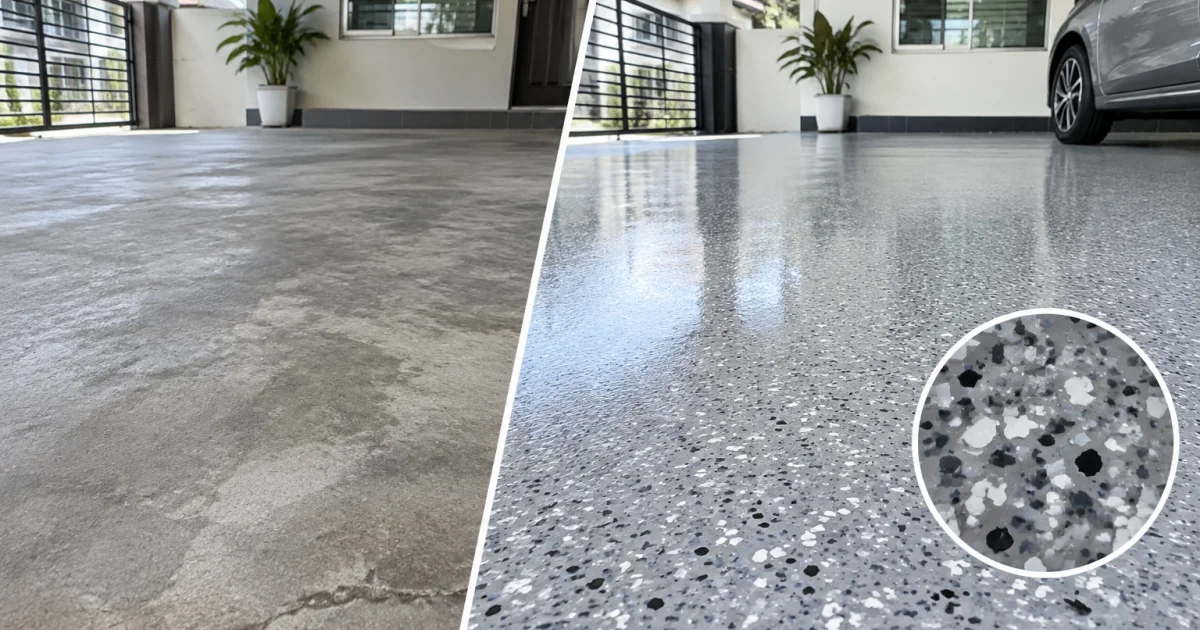
Is Epoxy Flake Coating Worth It for Selangor Homes and Shop Lots? A Practical Take on Durability, Safety, and Maintenance
For many Selangor homeowners and shop lot owners, flooring upgrades start with one persistent problem: water. Wet toilets, damp back lanes, rain-soaked car porches, balconies that pond after storms, and storerooms that get washed often can turn “nice tiles” into slippery, stained, grout-failing frustration.
Epoxy flake coating Selangor is popular because it looks clean, hides minor surface flaws better than plain epoxy, and can be specified with anti-slip texture. But whether it’s “worth it” depends on usage, moisture condition, substrate quality, and the maintenance you’ll actually do.
This guide offers a practical framework (clearly marked where it’s opinion) to help you decide if epoxy flake fits a Selangor home or shop lot—especially where moisture, seepage, or frequent cleaning is part of daily life.
What epoxy flake coating actually is (and what it isn’t)
Fact: Epoxy flake flooring is usually a multi-layer system: prepared concrete, primer/base coat, decorative vinyl flakes broadcast into the wet layer, then one or more clear topcoats (often polyurethane or similar) to seal and protect the surface.
Why flakes matter: they add visual depth, disguise small patch marks, and can support traction when paired with the right topcoat and texture.
What it isn’t:
- Not a cure for a wet slab or active leak.
- Not the same as “painting epoxy.” Durability depends on mechanical surface prep, moisture control, and correct curing.
- Not automatic building-envelope waterproofing. It can resist surface water, but won’t stop water coming from below or through walls.
Opinion (based on common failure patterns): Most disappointment happens when the real issue is water ingress. If water enters through cracks, joints, or walls, fix that first with the correct repair method instead of expecting a floor finish to do structural waterproofing work.
Durability in Selangor conditions: where it shines and where it struggles
Selangor sites often combine humidity, heavy rain, and practical cleaning habits (hosing down, strong detergents, occasional chemical spills). Epoxy flake can perform very well—when it matches site conditions and is installed as a proper system.
Areas where epoxy flake is usually worth considering
- Car porch floors (landed homes): better stain resistance than bare concrete, easier washing, more presentable long term.
- Shop lot back-of-house / storerooms: a more hygienic surface than old tiles and dirty grout lines.
- Stair landings and corridors (low to moderate impact): improved grip options and easier cleaning.
- Drier warehouse areas: helps with dust control and a brighter, cleaner look.
Areas where you should be cautious
- Continuously wet toilets and shower areas: workable, but detailing matters (drains, slopes, cove edges, anti-slip planning). Standing water demands the right texture and cleaning routine.
- External balconies and open terraces: UV, thermal movement, and ponding can shorten lifespan if the system isn’t designed for exterior exposure.
- Slabs with rising damp / hydrostatic pressure: moisture from below can cause blistering or delamination without moisture mitigation.
Common “durability killers” to check before you say yes
Fact: Even strong coatings fail on weak or contaminated substrates. Before choosing an epoxy floor coating in Selangor, check for:
- Weak concrete: hollow tapping sounds, powdering, crumbling edges.
- Cracks and joints: especially where water travels through.
- Oil contamination: common in porches and shop lots; poor degreasing/prep reduces bonding.
- Unknown previous coatings: may need removal; coating over unstable layers is risky.
Opinion: If you want long-term durability, prioritise preparation and crack treatment over flake colour selection. A good-looking blend won’t compensate for poor grinding, damp substrate, or rushed curing.
Safety and slip resistance: the honest trade-offs
Slip resistance is a key reason people choose flake systems for wet areas. Done right, it can be safer than glossy tiles. Done wrong, it can still be slippery—or become difficult to clean.
Fact: Slip resistance depends on the topcoat, surface texture profile, and contaminant build-up (soap film, algae, grease). Flakes alone don’t guarantee grip; the final finish does.
How to think about “anti-slip” without overpromising
- Smoother finish: easier to mop, higher slip risk when soapy/wet.
- More textured finish: better grip, but traps dirt and needs more deliberate scrubbing.
Opinion: For many Selangor homes, moderate texture is the best day-to-day balance. For shop lots with wet work areas, prioritising traction often makes more sense even if cleaning takes longer.
Edge details matter more than most people expect
Fact: Many slips and failures start at transitions: doorways, drain edges, steps, ramps, and wall-floor junctions. If seepage is present, fixing those entry points can matter as much as the floor finish. Some situations require wall crack repair or injection rather than “another layer” on the floor.
Maintenance reality: what you’ll actually do after installation
Epoxy flake is often marketed as “low maintenance.” It’s usually lower maintenance than grout-heavy tiles, but not zero—especially in humid zones where algae and soap film can build up.
Typical routines that keep the floor looking good
- Rinse and squeegee where possible: reduces residue and slip risk in wet zones.
- Use gentle cleaners: harsh acids/solvents can dull or weaken some topcoats over time.
- Address spills quickly: oils and chemicals can stain if left too long.
- Use entrance mats: reduces abrasive grit that wears topcoats.
What “recoat” means (and why it can be a smart plan)
Fact: In many flake systems, the clear topcoat takes the wear first. When traffic paths dull or thin, a planned maintenance recoat can restore protection without removing the whole system—if the base remains well bonded.
Opinion: A better system with a realistic recoat plan often delivers better value than a cheaper install that needs frequent patching due to poor bond or weak detailing.
Cost vs value: when epoxy flake is “worth it” (and when it’s not)
Prices vary by condition, size, detailing, and build-up. Instead of judging only per-square-foot, consider total value delivered: safety, cleaning time, and avoided repairs.
A practical checklist: signs epoxy flake is likely worth it
- You want a sealed, easy-to-clean surface with fewer grout lines.
- The concrete is sound, or can be properly repaired and mechanically prepared.
- You need better traction than glossy tiles in a wet or wash-down area.
- You can accept some texture and follow a realistic cleaning routine.
- You want a more consistent look across patched areas (flakes can visually blend repairs).
Red flags: when it may not be worth it (yet)
- There’s an active leak from walls/ceilings/cracks and you’re hoping to cover it.
- The slab has persistent dampness or signs of moisture pushing up from below.
- You need heavy impact performance (e.g., constant forklift abuse) but the specified system isn’t designed for it.
- You want an ultra-smooth glossy finish in a frequently wet area (safety compromise).
Don’t ignore surrounding waterproofing issues
Many “flooring” enquiries are actually building-water problems. If you see damp wall lines, bubbling paint near the floor, or recurring water marks after rain, you may need broader Waterproofing Selangor solutions—balcony waterproofing, wall waterproofing services, or joint sealing—before (or alongside) floor coating.
When cracks are the entry point, non-invasive methods can sometimes reduce leakage pathways. For example, pressure grouting or PU injection can fill voids and cracks depending on the situation. If cracks suggest movement, assess the root cause instead of repeatedly resurfacing.
How to choose a contractor and specify the system (without becoming an expert)
Choosing a Waterproofing contractor Selangor (or epoxy flooring specialist) is less about a material brand and more about diagnosis, preparation, and workmanship controls.
Questions worth asking during a site visit
- How will you prepare the surface? Look for mechanical prep (not only “acid wash”) and a plan for oil-contaminated zones.
- How will you treat cracks and joints? Correct treatment reduces telegraphing and water pathways.
- What topcoat finish fits my usage? Ask specifically about wet traction and cleaning practicality.
- How will you detail drains, slopes, and edges? Detailing is a common failure point.
- What curing time and restrictions apply? Reopening too early can damage the floor before full cure.
Match the floor system to the problem, not the trend
Opinion: If the main issue is “always damp, always leaking,” treat it as waterproofing first and flooring second. Some sites need wall crack repairs or injection, or to fix water entry from above (e.g., roof leaks tracking down walls). A good-looking floor won’t last if water keeps entering the structure.
If the main issue is “dusty concrete, ugly stains, slippery tiles, dirty grout,” epoxy flake can be a strong value upgrade—especially for porches and shop lots that need a clean, professional look.
Useful next reads (internal links)
- Flooring Epoxy Coating for an overview of epoxy floor options and typical applications.
- Crack Wall Repair if your “floor problem” comes with wall cracks or water marks.
- Pressure Grouting Pu Injection to understand non-invasive methods sometimes used to stop leakage through cracks and voids.
Conclusion: a practical verdict for Selangor homes and shop lots
Is epoxy flake coating worth it? Often, yes—when you’re upgrading from stained concrete or grout-heavy tiles and you want a sealed, better-looking, easier-to-maintain surface with adjustable slip resistance.
But it’s not worth it if you’re trying to hide active seepage, rising damp, or unaddressed cracks. In those cases, solve water entry first, then install the right floor system with correct preparation and detailing.
Treat epoxy flake as a system, match it to real site conditions, and it can be one of the most practical flooring upgrades for Selangor porches, shop lots, and back-of-house spaces.
Frequently Asked Questions
Is epoxy flake coating suitable for wet toilets in Selangor homes?
It can be suitable if the system is specified for wet use and installed with the right surface preparation, drain detailing, and a traction-focused topcoat. If the toilet area has frequent standing water or existing seepage from walls/floor cracks, fix the leakage source first; otherwise the coating may blister or become slippery due to soap film buildup.
How long does an epoxy flake floor typically last in a shop lot?
Service life depends heavily on substrate condition, preparation quality, traffic intensity, and chemical exposure. In many shop lot back-of-house areas, the clear topcoat wears first; a planned recoat can extend the floor’s usable life if the base layers remain well bonded. The most common early failures come from poor surface prep or moisture issues under the slab.
Can epoxy flake coating fix floor cracks or stop water leakage?
A coating may bridge hairline imperfections, but it is not a reliable fix for moving cracks or active water leakage. If water is traveling through cracks or joints, you may need targeted repair methods such as crack treatment, sealing, or in some cases PU injection/pressure grouting—then install the floor system after the root cause is addressed.
Is epoxy flake coating slippery when wet?
It can be, depending on the finishing topcoat and texture level. A smoother finish is easier to clean but may be slippery with water or soap. A more textured finish improves grip but can hold dirt and needs more thorough cleaning. For many Selangor homes and shop lots, a moderate texture offers a practical balance.
What should I ask an epoxy floor or waterproofing contractor before starting work?
Ask how they will prepare the surface (mechanical prep vs simple washing), how cracks and joints will be treated, what topcoat is recommended for wet traction, how edges/drains/ramps will be detailed, and what curing time is required before reopening the area. These points usually matter more than colour or flake size when it comes to long-term performance.
Planning an epoxy flake floor for a wet or high-traffic area in Selangor?
Cisco Waterproofing can help you decide whether epoxy flake is the right fit for your porch, balcony, toilet, shop lot, or warehouse area—and whether any leakage or dampness should be solved first. Our team focuses on root-cause assessment and offers complete solutions, including waterproofing services, crack & wall repair, and non-invasive pressure grouting / PU injection where appropriate.
Share your site photos and usage needs, and we’ll recommend a practical system and finish that matches safety, durability, and maintenance expectations.