


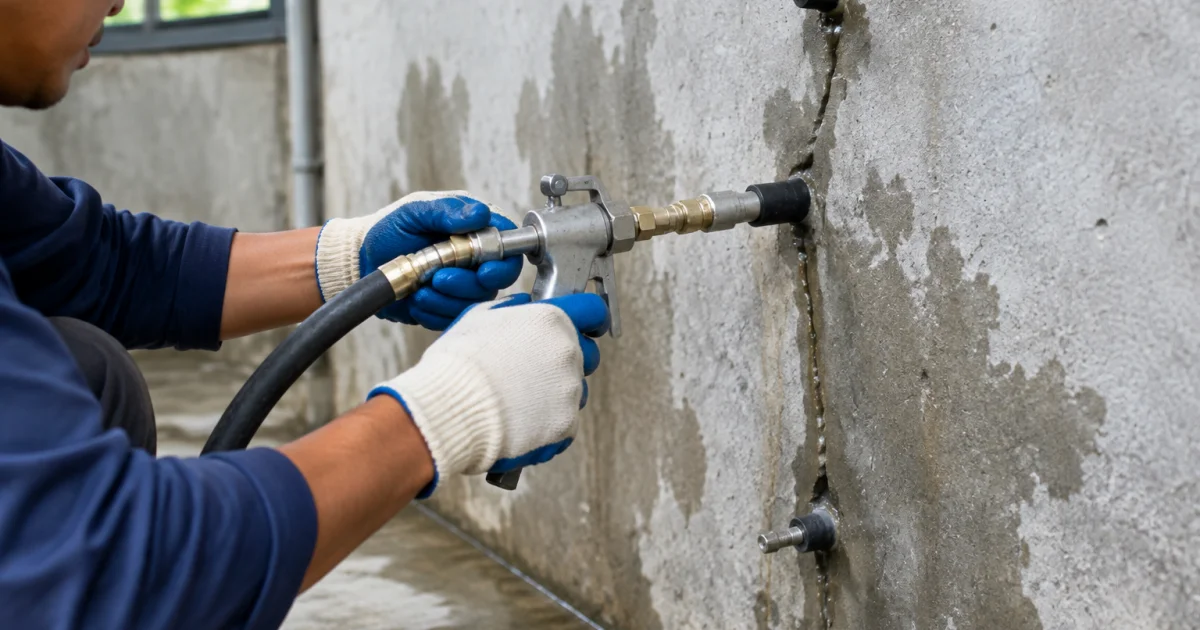
Pressure Grouting in KL: When It’s the Right Fix (and When It Isn’t) for Basement Seepage and Concrete Cracks
Basement dampness, seepage lines, and “mystery” wet patches around concrete cracks are common headaches for KL homeowners, JMB/MC committees, and facility managers—especially when leaks appear during heavy rain and then disappear for weeks. In these situations, the fastest-sounding solution is often grouting.
My view: pressure grouting is one of the most useful tools in leak stopping—but only when the issue is a void, pathway, or joint that can be filled and sealed from within. When the real problem is movement, hydrostatic pressure, membrane failure, or widespread concrete deterioration, grouting can become an expensive repeat-repair cycle.
This article explains how to think about Pressure Grouting kl decisions in a practical way: what it is, what it can realistically achieve, signs it’s the wrong approach, and how it compares with PU injection, membrane waterproofing, and crack repair methods.
What pressure grouting actually does (and what it doesn’t)
Pressure grouting injects a grout/resin into a concrete element—often via packer ports—under controlled pressure. The aim is typically to:
- Fill internal voids where water travels.
- Seal construction/cold joints where seepage tracks form.
- Cut off water pathways by occupying migration routes.
- Re-establish contact between separated surfaces in certain void/crack cases.
Where owners get disappointed is expecting grouting to behave like a new waterproofing “skin.” It isn’t. Grouting treats internal paths; it does not automatically protect large exposed areas like a membrane/coating system, and it won’t correct broader causes such as poor drainage, incorrect falls, or ongoing structural movement.
Also, “grouting” isn’t one material. Depending on objectives and site conditions, contractors may use cement-based grouts, chemical grouts, polyurethane resins, epoxy, or combinations. The right choice depends on whether the leak is active, whether flexibility is needed, and whether the goal is water cut-off, structural bonding, or both.
When pressure grouting is the right fix for basement seepage in KL
In KL and Klang Valley, basement seepage commonly happens when water finds a route through joints, honeycombs, penetrations, or cracks—often after storms when the soil is saturated. In these pathway-driven cases, grouting can be a strong option.
1) Seepage through construction joints and cold joints
Basements and retaining walls have joints where concrete pours meet. Over time, micro-gaps can develop or water can exploit imperfect bonding. If seepage appears along a joint line (not randomly across the wall face), targeted grouting can work—provided the injection plan follows the pathway, not just a single wet spot.
2) Localised honeycombs or voids in concrete
Honeycombing (poorly consolidated concrete) creates channels for water. If inspection suggests a localised void/porous zone, pressure grouting can densify/fill the area and stop recurring dampness—often with far less hacking and reinstatement.
3) Active leaks that need immediate cut-off with minimal disruption
For management bodies and facility teams, disruption is often the real cost. When leaks affect ramps, electrical-room perimeters, or critical access routes, injection-style solutions can be operationally attractive. The key is being clear on the outcome: rapid mitigation and pathway sealing—not replacement of external waterproofing.
4) Known entry points around penetrations (pipes, sleeves, embedded items)
Penetrations through walls and slabs can leak if detailing fails. If the entry point is defined and accessible for packers, grouting can be a neat targeted fix, often paired with localised surface sealing or improved detailing around the penetration.
When pressure grouting is the wrong call (and why it keeps failing)
Many grouting jobs fail because the wrong leakage mechanism was treated. In the situations below, grouting may still help, but usually as a supporting step—not the main solution.
1) The crack is moving (live cracks)
If a crack opens/closes with temperature, settlement, vibration, or structural movement, rigid fills may not survive. You may see re-cracking beside the treated line or dampness migrating to the next weak point. These cases may require movement-tolerant systems, better detailing, or structural assessment depending on severity.
2) You’re treating symptoms of external waterproofing failure
Basement waterproofing works as a system. If an external membrane/barrier has failed over a broad area, water may enter at multiple points. Treating only the visible leak spots can provide temporary relief, but water often finds another route—leading to “chasing leaks.”
3) High hydrostatic pressure with no drainage relief
When groundwater pressure is high, water will push through weaknesses. Grouting can block one path, but pressure remains and may force water elsewhere (e.g., slab-wall junctions or previously dry hairline cracks). If drainage strategy, joint detailing, or broader waterproofing measures are needed, discuss those before relying on injection alone.
4) Widespread concrete deterioration or spalling
If concrete is breaking down (spalling, delamination, corrosion-related damage), injection is not a substitute for concrete repair. The right sequence may include removing unsound concrete, treating steel (if applicable), reinstating with repair mortar, then applying suitable waterproofing protection. Grouting into “bad concrete” can be like filling a sponge.
5) The “leak” is actually plumbing or internal water migration
Not all wetness is groundwater. In multi-storey buildings, water can travel from bathrooms, planters, downpipes, or condensate lines and show up at basement level. If the source is plumbing, grouting treats the wrong system—so root-cause tracing matters, especially in condos where liability and repeat damage are costly.
Pressure grouting vs PU injection vs other waterproofing options (a practical comparison)
Instead of “Which is better?”, ask: Which method matches the failure mode and access constraints? Use this comparison during site discussion.
| Method | Best for | Main limitations |
|---|---|---|
| Pressure grouting | Filling voids and sealing defined pathways in concrete/joints; localised seepage control | Not a “new membrane”; can fail if movement/pressure redirects water elsewhere |
| PU injection (resin) | Stopping active leaks where flexibility/expansion helps; fine cracks and joint lines | Still a pathway treatment; needs correct resin choice and injection plan |
| Crack repair (cementitious/epoxy methods) | Repairing non-leaking or controlled cracks; restoring surface integrity | May not stop active seepage unless paired with injection/waterproofing |
| Torch-on membrane / coating systems | Large-area waterproofing on accessible surfaces (terraces, flat roofs, podiums) | Needs access and good substrate prep; not ideal for hidden external basement faces |
| Epoxy flooring coating | Durable floor protection in car parks/warehouses; easier maintenance and chemical resistance (where specified) | Not a standalone solution for active water coming up from beneath unless designed as a full system |
If you’re comparing PU injection waterproofing KL services with grouting, ask what material is being injected and why. Some contractors use “PU injection” to mean a polyurethane resin approach for active leaks; others use different chemical grouts under “grouting.” The label matters less than the mechanism: flexible leak-stopping vs rigid void filling vs structural bonding.
If cracks are the main concern, long-term results often come from combining steps: injection to stop water, then proper reinstatement and protective waterproofing where accessible. For those evaluating a Wall crack repair service KL provider, ensure they discuss source, movement, and water path—not only patching the visible line.
How to decide on-site: questions to ask before approving a grouting job
If you’re approving repairs based on a short visit and photos, these checks reduce the risk of “same leak, different spot.”
Ask for a clear leak hypothesis
A competent contractor should explain where water is entering and how it travels to the visible damp area. “We grout where it’s wet” is not enough. Even a simple mechanism (joint seepage, slab-wall junction, penetration leakage) shows there is a plan.
Confirm whether the crack is active or dormant
Start with practical indicators: does the crack change width, are there signs of differential movement, or was there recent renovation/nearby construction vibration? If movement is likely, detailing and material selection become critical.
Understand the injection layout (not just the material)
Results depend heavily on packer spacing, depth, sequence, and pressure control. Poor layout can leave untreated channels and lead to repeat call-backs. Request a simple sketch of packer locations and injection sequence for clarity and accountability.
Plan for reinstatement and “secondary protection” where relevant
After seepage is stopped, consider the right reinstatement and protection layers. Internal walls may need re-rendering or breathable finishes; floors may need protective systems depending on use. In car parks/warehouses, a specified floor system can reduce maintenance—this is where flooring epoxy coating can fit into an overall durability plan (but it is not a substitute for stopping incoming water).
Watch for scope mismatch in basements
Basement leakage can involve walls, slab joints, sumps, drain lines, and external ground conditions. If the scope is only internal injection but symptoms suggest broader failure, ask for options and staging: treat the highest-risk points first, then reassess after rain cycles.
Conclusion: use grouting as a targeted tool, not a one-size-fits-all promise
Pressure grouting can be a practical choice in KL when seepage is caused by a definable pathway—joints, voids, honeycombs, penetrations, and localised cracks—especially when you need a low-disruption repair. Done correctly, it can be faster and more cost-effective than extensive hacking or external excavation.
But when the issue is movement, broad waterproofing failure, high pressure redirecting water, or deteriorated concrete, grouting alone often disappoints. Better outcomes come from matching the method to the failure mode and detailing the sequence properly: leak cut-off, crack/joint treatment, reinstatement, and protective waterproofing where access allows.
If you’re comparing options, ask for a site assessment that explains the suspected water path and why grouting is recommended over alternatives. For more detail on injection options, review Cisco Waterproofing’s Pressure Grouting & PU Injection service and how it’s typically applied in real leakage situations.
Frequently Asked Questions
Is pressure grouting the same as PU injection?
Not exactly. “Grouting” refers to injecting a grout or resin to fill voids or seal pathways, while PU injection commonly refers to injecting polyurethane resin that can expand and remain flexible for active leaks. Some contractors use the terms interchangeably, so it’s best to ask what material will be injected and what the objective is (leak cut-off, void filling, or structural bonding).
When is pressure grouting a good option for basement seepage?
It’s usually a good option when seepage is travelling through a definable pathway—such as a construction joint, cold joint, localised honeycombing, or a specific penetration point—where injected material can fill and seal the internal route without major hacking.
Why does leakage sometimes come back after a grouting job?
Common reasons include treating only the visible wet spot (not the full pathway), water being redirected to the next weak point under pressure, the crack being “live” and moving, or the real source being external waterproofing failure or plumbing. A good repair plan explains the suspected water path and includes proper injection layout and sequencing.
How do I choose between grouting and a wall crack repair service in KL?
If the crack is actively leaking, injection/grouting is often used to stop water first, then surface crack repair and reinstatement follow. If the crack is non-leaking or mainly cosmetic/finish-related, a crack repair approach may be sufficient. The best choice depends on whether water is present, whether the crack is moving, and where the water is coming from.
Can epoxy floor coating solve basement water seepage?
Epoxy flooring can improve durability and maintenance for floors, but it is not a standalone fix for active water coming from below unless the system is designed specifically for that condition. If seepage is present, the priority is to identify and stop the incoming water path (often at joints, cracks, or penetrations) before selecting a protective floor system.
Need a clear answer on whether grouting is the right fix?
Cisco Waterproofing helps KL and Selangor owners and management teams stop recurring seepage by focusing on the root cause—then choosing the right method, whether that’s pressure grouting, PU injection, crack repair, membrane waterproofing, or protective coatings.
If you’re dealing with basement dampness, concrete cracks, or repeated “patch-and-leak-again” cycles, request an assessment and a practical repair plan that matches your building’s conditions.