


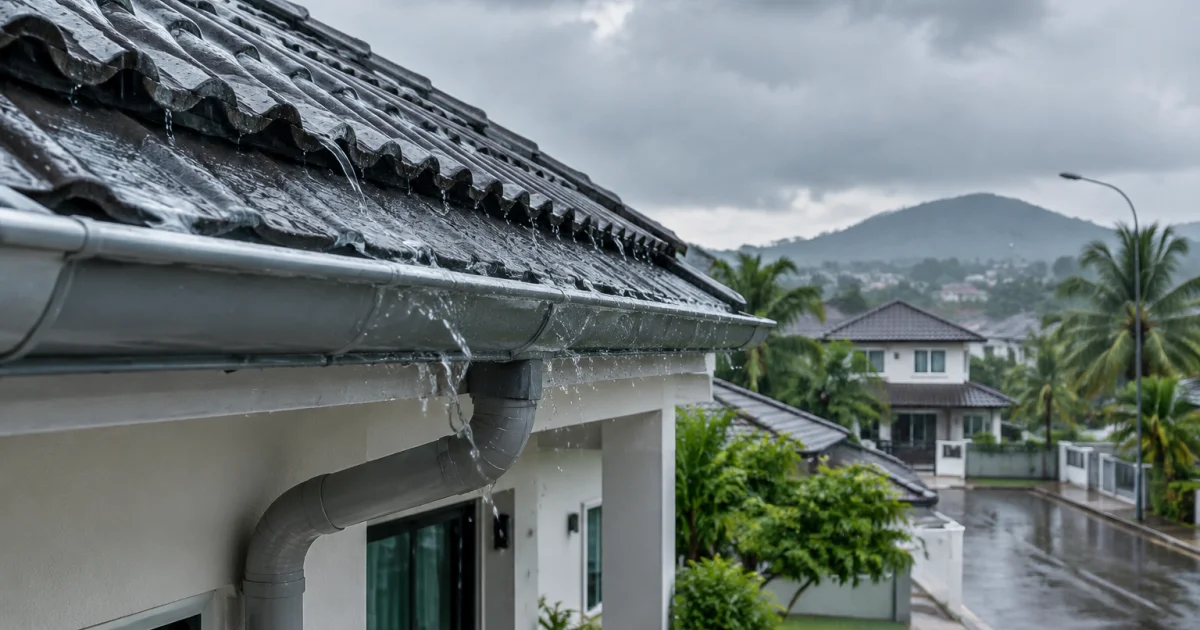
Industry Update for Selangor Property Owners: What’s Driving More Demand for Waterproofing Works in High-Rainfall Months
Across Selangor, heavier rain spells often turn “small” building issues—hairline cracks, aging sealant, blocked outlets—into sudden, disruptive leaks. For homeowners, it may start as a ceiling stain that spreads quickly. For condominium management, it becomes repeated complaints across multiple stacks. For shop lots and factories, the impact can include downtime and risk to stock, equipment, and electrical systems.
This update explains what’s driving the growing demand for Waterproofing Selangor services during high-rainfall months, which failures show up most often, and how to respond with practical, longer-lasting solutions. Because waterproofing isn’t one single “product,” we’ll also outline when to consider options like PU injection, pressure grouting, torch-on membranes, heavy-duty PU coatings, metal roof coating, epoxy flooring, and targeted plumbing repair—based on where water is entering and how your building is built.
1) Why high-rainfall months expose more “hidden” building failures
Many waterproofing problems develop quietly: membranes age, coatings degrade under UV, cracks widen with movement, joints open up, and sealant hardens and separates. Dry months can hide these defects. High-rainfall months change conditions in ways that make leaks easier to trigger and harder to ignore:
Longer wet time on surfaces. Frequent storms keep roofs and terraces wet, giving water more time to find weak overlaps, pinholes, or poorly detailed edges. Slow drainage and partially blocked outlets make this worse.
Higher water pressure at weak points. Ponding on flat roofs, backed-up gutters, and saturated walls increase hydrostatic pressure, so small cracks or joints can start “weeping” and then become active leaks.
Faster wear from combined exposure. Repeated wetting, humidity, and heat/UV cycles accelerate fatigue. Expansion and contraction can widen joints and existing cracks—especially around parapets, penetrations, and metal deck fasteners.
Practically, a roof that seems fine in dry months can show multiple leak points after weeks of frequent storms, driving a seasonal spike in inspections, repairs, and system replacement.
2) What property owners are noticing: the most common leak patterns in Selangor
During high-rainfall months, complaints tend to cluster in predictable locations. Recognizing the pattern helps you respond faster and avoid paying for the wrong fix.
Ceiling stains and dripping that “move” over time
Water often travels along purlins, conduits, beams, or within ceiling voids before it shows up. This is why patching a ceiling rarely solves the issue; the repair must target the roof layer or penetration where water enters.
Balcony leakage into the unit below
Balconies commonly fail at edges, door thresholds, planter boxes, and floor-wall junctions. When detailing is weak or old waterproofing turns brittle, rainwater can seep into the slab and appear as damp patches below or along wall lines.
Bathroom seepage and damp smells
Bathrooms face daily water and humidity. In rainy seasons, slower drying increases persistent dampness, mold, and seepage risk. Some cases are plumbing-related rather than waterproofing failure, so diagnosis is essential.
External wall dampness and paint bubbling
Wind-driven rain can push water into hairline cracks, window perimeters, and porous render. Typical symptoms include bubbling paint, efflorescence, and damp marks that worsen during prolonged rain.
Metal roof drips at screws and overlaps
Metal deck roofs often leak at fasteners, laps, ridge caps, and penetrations. Degraded washers, early rust, failed lap seals, and panel movement can turn minor issues into frequent drips—prompting owners to consider longer-term metal roof coating, systematic repair, or (when deterioration is extensive) replacement rather than repeated sealant touch-ups.
3) What’s driving demand beyond the weather: building stock, maintenance gaps, and cost awareness
Rainfall is the trigger, but demand growth is also shaped by practical factors:
More properties reaching “repair age.” Many homes, shop lots, and strata buildings now have original waterproofing and sealants near or past their effective life, making leaks more frequent and harder to control with patches.
Deferred maintenance meets peak stress. Roof cleaning, gutter servicing, and minor crack repairs are often delayed until there is visible leakage. High rainfall raises the cost of delay by turning maintenance into emergency work.
Preference for lower disruption. Occupied homes, active retail, and operating factories increasingly want solutions that reduce hacking, downtime, and mess—supporting demand for targeted methods like pressure grouting & PU injection (when suitable) and coating systems that can be staged with controlled work zones.
More awareness of root-cause repairs. After experiencing repeat leaks from superficial patching, owners and management bodies look for diagnosis and systems-based solutions (membranes, detailing upgrades, re-coating, or partial replacement) instead of repeated touch-ups.
Risk management for commercial and strata. Management bodies need proactive maintenance to reduce complaints and prevent larger rectification costs. Rainy months create urgency to inspect, define scope, and appoint vendors before the next storm cycle.
4) Fast triage checklist: what to check before you call a contractor
Before engaging a contractor, a few safe checks and basic documentation can reduce misdiagnosis and help you compare quotations more fairly.
- Document timing: Does it leak only during heavy rain, after rain stops, or mainly during wind-driven rain from one direction?
- Map symptoms: Photograph stains, drips, bubbling paint, damp skirting, and visible cracks; note the room and nearest external wall.
- Observe gutters/downpipes from ground level: Look for overflow marks, sagging, and water spilling at corners.
- Note penetrations above the affected zone: Solar piping, water tank stands, air-cond piping routes, vents, and skylights are common weak points.
- Identify surface type: Flat slab roof, tiled pitched roof, metal deck, balcony slab, bathroom floor, basement wall—each needs different methods.
- Rule out plumbing where relevant: In bathrooms/kitchens, note whether leakage correlates with fixture use versus rain events.
This improves communication with contractors and helps ensure the proposed method matches the likely entry path.
5) Matching the right solution to the right problem (not every leak needs a full membrane)
Rainy-season leaks rise partly because the correct fix depends on the failure mechanism. Below is a practical guide to common methods and when they usually fit Selangor properties.
Pressure grouting & PU injection for cracks and active seepage pathways
When water enters through cracks, construction joints, or internal voids—often in concrete slabs, retaining walls, planter boxes, or certain bathroom/duct areas—PU injection and pressure grouting can work well by sealing the pathway within the structure. These methods are often considered when owners want a targeted approach with less hacking, especially where access is limited.
Practical example: A condo receives recurring leakage complaints below a rooftop service area. If water is likely traveling through slab cracks or joints, injection may be part of a targeted repair strategy, followed by monitoring after rainfall or controlled testing where feasible.
If you’re searching for “pressure grouting near me,” choose contractors who can explain the water path, why injection suits the location, and how they will verify results.
Torch-on membrane systems for flat roofs, terraces, and exposed slabs
When deterioration is widespread across a flat roof or terrace—especially with ponding—membrane systems are commonly considered for durable protection. Torch on membrane waterproofing Selangor is typically discussed for flat roofs, balconies, and terraces that need a continuous bituminous barrier with proper detailing at upstands, outlets, and terminations.
Practical example: A shop lot flat roof leaks at multiple points after each storm. If patching one area leads to leaks appearing elsewhere, that often signals system-level failure, where a re-waterproofing scope plus drainage/detailing improvements can be more cost-effective than repeated spot repairs.
Decision tip: Confirm how outlets, parapets, penetrations, and ponding areas will be handled. Even strong materials fail early when drainage and detailing are ignored.
Heavy-duty PU coating for complex shapes and maintenance-friendly protection
PU coating is often chosen when a seamless coating is preferred for certain shapes and details, provided the substrate is suitable and preparation is done correctly. It can be used on rooftops, some terraces, and industrial areas where future maintenance access matters. For factories/warehouses, system selection should account for use conditions such as traffic, vibration, and possible chemical exposure.
Metal roof coating and targeted roof repair for metal deck roofs
During high-rainfall months, metal deck roof leaks are often revealed as multiple contributing failures—aging washers, panel movement, corrosion, and failed lap seals—rather than a single “hole.” Two common directions are:
- Targeted repair: Replace damaged sheets/flashings, repair ridge caps and penetrations, and replace compromised fasteners where required.
- Coating-based refurbishment: Apply a metal roof coating system after proper cleaning, rust treatment, and detailing repairs.
Practical example: A warehouse reports drips along a purlin line. If inspection shows multiple fasteners with degraded washers and early corrosion, a systematic repair and refurbishment plan usually performs better than chasing individual drips.
When deterioration is extensive, owners may consider metal deck roofing replacement. The best choice depends on sheet condition, structural integrity, and life-cycle expectations—not only the immediate leak.
Wall waterproofing services for façade cracks, window perimeters, and dampness
Wind-driven rain is a major cause of wall dampness in rainy months. “Wall waterproofing services” may include crack repair, re-sealing around windows/doors, protective coatings, or localized rebuilding of weak render/plaster. Repainting alone rarely solves recurring dampness if the entry point remains.
Because wall dampness can also be caused by plumbing or condensation, site assessment is important before selecting injection, resealing, or coating solutions.
Epoxy coating for floors in wet areas and industrial settings
Epoxy flooring isn’t a roof-leak fix, but rainy months often highlight wet-floor slip risk, hygiene issues, and moisture-related wear in toilets, back-of-house spaces, warehouses, and certain factories. A suitable epoxy system can improve water resistance, cleaning, and durability when specified for the environment and installed with proper preparation.
6) Why “quick fixes” fail more often in rainy months (and how to avoid repeat leaks)
High-rainfall months quickly expose the limits of short-term methods. Some quick repairs can help as temporary controls, but only when used appropriately and with realistic expectations.
Sealant-only patching without preparation. Applying sealant on wet, dusty, chalky, or moving substrates often fails adhesion. Sustained rain then drives water under edges.
Painting over damp walls. This can hide stains but trap moisture, leading to faster bubbling and peeling. If cracks, joints, or window perimeters aren’t fixed, dampness returns.
Replacing ceiling boards without stopping the source. Interior restoration improves appearance but not performance; it often needs repeating after the next storm if the entry point isn’t addressed.
Spot repairs when the system has failed. If a flat roof waterproofing layer has aged across the surface, patching one zone can simply redirect water to other weak points. Assessment should determine whether you need localized repair, partial re-waterproofing, or full replacement.
Practical tip: Ask the contractor to explain the failure mechanism (ponding, penetration detailing, joint movement, corrosion, crack pathway) and how the proposed scope addresses it. Vague promises without mechanism-specific reasoning increase the chance of repeat leaks.
7) Choosing contractors during peak demand: what to ask and what to compare
During rainy months, schedules fill up and quotations can differ widely. When evaluating Roof leak repair contractors Selangor, compare based on diagnosis quality and scope clarity, not price alone.
Questions to ask before approving works
- Where is the water likely entering? Request a clear diagnosis and reasoning.
- What preparation is included? Preparation quality often determines coating/membrane success.
- How will detailing be handled? Outlets, upstands, parapets, penetrations, and edges are frequent failure points.
- Is the scope localized or system-wide? Ask why the chosen extent is appropriate.
- What are the limitations? Trustworthy contractors explain where a method may not be ideal.
- What disruption should we expect? Especially for occupied units, common areas, or operational sites.
How to compare quotations fairly
- Area coverage: Confirm both quotes cover the same zones/elevations.
- System build-up: Material type, number of layers, reinforcement at corners/joints, termination method.
- Repair inclusions: Crack/joint treatment, flashing repairs, fastener replacement, drainage improvements.
- Access and safety: Scaffolding, rope access, or lifts (often a major factor for strata and tall shop lots).
8) Preventive plan for the next rainy cycle: a practical schedule for homes, strata, and SMEs
To reduce emergencies, plan simple inspections and maintenance rather than waiting for visible leaks. The goal is to fix likely failure points while the scope is still small.
For landed homes
- Twice-yearly roof and drainage checks: Clear gutters, confirm downpipe flow, and look for overflow marks after storms.
- Sealant and flashing review: Focus on skylights, vent penetrations, valleys, and roof-to-wall junctions.
- Balcony threshold checks: Address early cracks at floor-wall junctions and door areas before seepage spreads.
- Attic/ceiling spot checks: After heavy storms, look for early signs before stains expand.
For condominium and apartment management
- Common-area roof/terrace inspections: Prioritize flat roof zones, podium decks, plant rooms, and service corridors.
- Complaint mapping: Track leaks by stack/elevation to identify repeating pathways.
- Planned vendor engagement: Schedule assessments before peak rainy periods to avoid rushed decisions.
For shop lots, warehouses, and factories
- Metal deck maintenance: Check fasteners, corrosion hotspots, overlaps, ridge caps, and penetrations; plan repair/coating before rust becomes widespread.
- Operational risk review: Identify where leaks could affect inventory, electrical distribution, or sensitive machinery.
- Floor protection planning: In wet zones, consider appropriate floor systems (including epoxy options) to reduce moisture-related wear.
Conclusion: why demand rises—and how to respond with fewer repeat repairs
High-rainfall months don’t create waterproofing problems from nothing; they expose weaknesses already developing—aging materials, small cracks, poor drainage, and detailing that no longer performs. As more Selangor properties reach repair age and owners become less tolerant of repeat patching, demand shifts toward diagnosis-led, system-based repairs.
If you’re facing a leak, start with safe observation and documentation, then engage a contractor who can explain the root cause and match the method to the affected building component—whether that means PU injection/pressure grouting for crack pathways, torch-on membranes for flat-roof protection, heavy-duty coatings for long-term surface defense, metal deck repair or coating for corroded roofs, targeted wall waterproofing for wind-driven rain entry, or supportive plumbing rectification and epoxy flooring for wet areas. The goal isn’t only a dry ceiling after the next storm, but fewer repeat leaks through the next rainy cycle.
Frequently Asked Questions
Why do roof leaks seem worse during high-rainfall months in Selangor?
Frequent rain keeps roofs and slabs wet for longer, increases ponding and water pressure at outlets and joints, and pushes wind-driven rain into small cracks and gaps. Problems that stayed hidden in dry months become obvious when surfaces don’t get time to dry and weak details are repeatedly stressed.
Should I choose PU injection/pressure grouting or a membrane system for my leak?
It depends on the leak pathway. PU injection or pressure grouting is often considered when water is travelling through cracks, joints, or internal voids (for example in concrete slabs or retaining walls) and a targeted, less invasive repair is suitable. Membranes (such as torch-on systems) are more commonly considered when the waterproofing layer on a flat roof, terrace, or balcony is broadly deteriorated and needs a continuous surface barrier.
What are common warning signs that I need professional waterproofing, not just sealant touch-ups?
Repeated staining after every storm, multiple leak points appearing over time, bubbling paint or persistent dampness on walls, balcony leakage into the unit below, and drips from metal deck fasteners or overlaps are all signs the issue may be system-related or due to poor detailing. In these cases, a proper assessment and a matched repair system usually performs better than repeated spot patching.
How can I compare quotations from roof leak repair contractors in Selangor?
Compare the scope and method, not only the price. Check whether both quotes cover the same area, what surface preparation is included, how edges/outlets/penetrations are detailed, whether crack and joint treatments are included, and whether access and safety requirements (especially for strata and tall buildings) are included. Ask each contractor to explain the root cause and the limitations of their proposed system.
Is metal roof coating a good alternative to metal deck roofing replacement?
Metal roof coating can be a practical refurbishment approach when the roof structure is still sound and corrosion is manageable, but preparation and detailing repairs are critical. If the metal sheets are heavily rusted, distorted, or the roof system has widespread failure, partial or full metal deck roofing replacement may be more appropriate. A site inspection should confirm the condition of sheets, fasteners, flashings, and drainage before deciding.
Plan Your Waterproofing Works Before The Next Heavy Rain
If your home, condo, shop lot, or facility is showing early leak signs—or you’re facing active seepage—Cisco Waterproofing can help you identify the root cause and recommend a practical repair scope for Selangor conditions. From PU injection and pressure grouting to torch-on membranes, heavy-duty PU coating, metal deck roof repair, wall crack solutions, epoxy flooring, and supporting plumbing works, our team provides complete waterproofing and roofing options designed to reduce repeat leaks and disruption.