


Wall Crack Repair in KL: My Opinion on Quick Patches vs Proper Diagnosis (and Why Cracks Keep Coming Back)
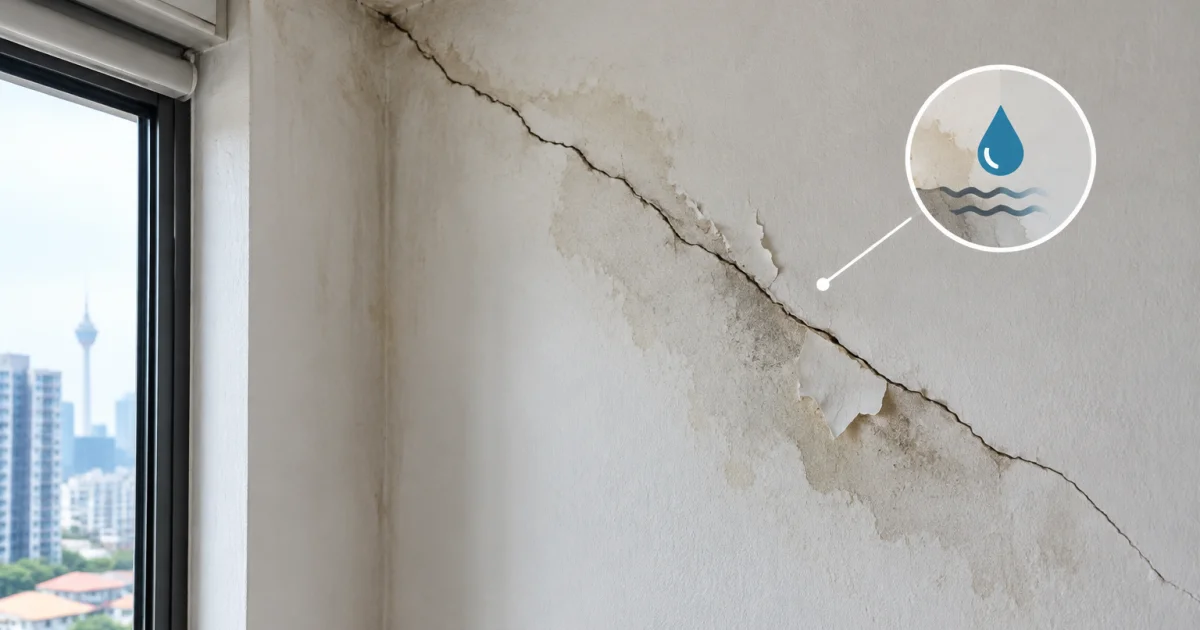
In Kuala Lumpur, I see the same cycle: a wall crack appears, someone fills and paints it, and everyone hopes it’s “done.” Weeks or months later, it reopens—sometimes with damp stains, bubbling paint, or a musty smell that points to moisture.
My view is straightforward: quick patches are not repairs. They can hide a line, but they usually don’t address why the crack formed or why water keeps getting in. If you’re comparing a handyman fix versus a specialist, the real difference is the diagnosis and the method selection—not just the filler.
If you’re searching for a Wall crack repair service KL, this is for homeowners, condo management teams, and building managers dealing with cracks that keep coming back and want to tell surface work from a root-cause fix.
My take: why quick patches are so tempting (and so often disappointing)
Patching is popular because it’s fast, looks clean immediately, and causes minimal disruption—easy to approve for occupied units and managed properties.
The issue is that many cracks are a symptom. A filler-and-paint approach assumes the wall is stable and dry. In KL’s rain and humidity, those assumptions often fail. If the wall is still moving or moisture is still present, a rigid patch behaves like a bandage on a moving joint.
In my experience, patches fail for a few repeat reasons:
- The crack is “alive” (ongoing movement from expansion, settlement, vibration, or stress).
- Moisture is behind the paint, preventing bonding and causing blistering/peeling.
- The crack is not the entry point; water enters elsewhere (roof, balcony edge, window frame, parapet) and shows up later.
- Wrong material/system (rigid compounds over movement cracks, or skim coating over weak/voided substrate).
A patch isn’t always wrong. It’s wrong when it’s treated as a one-size-fits-all “final solution.”
Before any repair, diagnose the crack like a problem—not a line
A proper crack repair process starts with questions: where it appears, when it worsens, whether there’s dampness, and what’s on the other side of the wall. If a contractor jumps straight to “fill and paint,” that’s usually a sign the cause hasn’t been considered.
1) Pattern and location: what the crack is “telling” you
- Hairline plaster crazing can be shrinkage/finishing/age—often cosmetic if truly dry.
- Diagonal cracks near window/door corners can indicate stress concentration or slight movement.
- Vertical cracks at wall-to-column joints can reflect different movement between materials.
- Cracks with damp staining should be treated as a water-ingress problem first, not just a crack-filling job.
For condos/high-rises, also note whether it’s an external wall and whether it’s near bathrooms, planter boxes, balconies, façade joints, or window perimeters—common sources of recurring seepage.
2) “Dry crack” vs “wet crack”: the decision that changes everything
The biggest mistake is repairing a crack as if it’s dry when it’s wet behind the finish. You can hide the line briefly, but moisture will reveal itself through:
- efflorescence (white salty deposits),
- blistering/peeling paint,
- soft, chalky plaster,
- mouldy odours and recurring damp patches.
When moisture is present, the conversation should include wall waterproofing services (or correction of the water path), not just cosmetic finishing.
3) Check the “upstream” sources—roof, balcony, façade, plumbing
Many repeat cracks are blamed on “structure,” but water routes are often the real repeat-offender. Common examples:
- Roof/parapet seepage on top floors: water enters above and tracks down internally.
- Balcony edges/planter boxes: failed waterproofing lets water migrate into wall sections.
- Bathroom wet areas behind the wall: waterproofing failure or plumbing leakage keeps the wall damp.
- External hairline façade cracks: wind-driven rain pushes water through.
If the suspected source is above or adjacent, treat the wall crack as the visible exit, not necessarily the entry.
Quick patches vs proper repairs: what I would accept in a proposal
When comparing quotations, I mentally sort them into: cosmetic patching, functional crack repair with movement management, and leak-stopping injection/void filling. A good specialist explains which category applies and why.
Option A: cosmetic patching (when it’s acceptable)
Cosmetic patching can make sense when the crack is confirmed dry, stable, and superficial. Typical steps: open slightly, fill with a suitable compound, sand, repaint.
Even then, I’d want:
- A limitation statement (cosmetic work can recur if movement/moisture continues).
- A basic cause check to rule out dampness or delamination before finishing.
Option B: proper crack repair (bonding + movement management)
For wider cracks, weakened finishes, or recurring lines, the repair should restore the substrate and account for movement. Depending on conditions, that may include:
- removing loose/delaminated plaster,
- rebuilding with appropriate repair mortar,
- reinforcement mesh where needed,
- flexible sealants at moving joints,
- recoating systems suited to internal vs external exposure.
This is where compatibility matters: rigid layers over a moving joint typically crack again. The “right” system depends on what’s moving and why.
Option C: injection/pressure work (when water is actively involved)
If water is penetrating through cracks, joints, or voids, surface patching is usually the wrong approach—you’re treating the symptom on the dry side while the wet side keeps feeding the problem.
In such cases, non-invasive methods may be appropriate, such as PU injection waterproofing KL for active leaks through cracks/joints, where the injected material reacts to seal water paths. Another method is Pressure Grouting kl (also commonly written as pressure grouting in KL), which can help fill voids and reduce seepage depending on the structure and pathway.
Injection isn’t magic. It works when the leak path is correctly identified, injection points are planned, and the right material is used. Poorly targeted injection can give short-lived results and then fail when water finds the next weak point.
Why cracks keep coming back in KL buildings (my shortlist)
Recurring cracks usually mean at least one root cause wasn’t solved:
- Ongoing movement: expansion on external walls, minor building movement, vibration, differential movement (column vs brickwall).
- Water pressure and migration: water travels within wall systems; the visible crack isn’t always the entry point.
- Poor surface preparation: coating over dampness, not removing weak plaster, inadequate curing.
- Wrong finishing layer: external walls often need more protective, weather-resistant systems.
- Ignoring adjacent systems: roof edges, balcony waterproofing, window perimeter sealing, plumbing, façade joints.
For building managers, track when it worsens (after heavy rain, hot afternoons, specific seasons). The timeline often distinguishes water ingress from movement.
How to choose a specialist (what I’d ask before signing)
If you want to avoid paying twice, ask questions that force a diagnosis-led answer.
1) “What do you think is causing it?”
They don’t need perfect certainty on day one, but they should offer a reasoned hypothesis: water route, joint movement, façade exposure, bathroom adjacency, roof/parapet issues, or substrate failure. If it’s only “we fill and paint,” expect recurrence.
2) “How will you confirm whether it’s wet behind the wall?”
Sometimes it’s obvious (staining, peeling), sometimes it needs simple on-site checks. What matters is whether they treat dampness as a primary driver and propose stopping the water—not hiding evidence.
3) “What method will you use, and why that method?”
A solid proposal links method to problem type:
- Cosmetic patch for superficial, dry, stable cracks.
- Rebuild/mesh/flexible joint detailing for movement-related cracking.
- Injection/grouting when seepage is active or voids are suspected.
4) “What areas around the crack will you inspect?”
For top floors, I’d expect roof edges and waterproofing continuity to be mentioned. If metal roofing is involved, the roof system itself (fasteners, laps, rusting) may be the real issue—sometimes it’s more logical to address the roof first via repair or, in some cases, roof tile and metal deck repair rather than repeatedly chasing interior symptoms.
5) “What is the scope boundary?”
Good scopes define what’s included: treatment length/area, plaster removal extent, finishing and repainting boundaries, and whether waterproofing is included or optional. Vague scopes often lead to disputes and disappointment.
Practical decision guide: if you only remember one thing
Dry + stable + superficial can justify a cosmetic repair. Wet, recurring, spreading, or stained should trigger a diagnosis-first approach and often waterproofing-oriented methods.
If your crack comes with dampness, bubbling paint, or musty odour, don’t accept “patch and paint” as the final answer. Stop the water path first, then repair and finish once the area is dry and stable.
Conclusion: pay for thinking, not just filling
In KL properties, wall cracks are common. Recurring cracks usually signal an unresolved cause—movement, water ingress, voids, or an incompatible repair system. Quick patches can be fine for minor, dry, stable imperfections. But when cracks return or show moisture, the value is in diagnosis and a method matched to the real problem.
If you’re comparing a handyman versus a specialist, judge them by how they explain the cause, how they confirm dampness, and whether they recommend the right category of solution: cosmetic finishing, proper repair detailing, or leak-stopping injection/grouting. That’s how you cut repeat call-backs and avoid paying for the same crack twice.
For more on professional solutions, you can also review Cisco Waterproofing’s crack wall repair service details and examples of wall crack repair projects to understand what a diagnosis-led approach typically involves.
Frequently Asked Questions
When is a wall crack considered “serious” enough to call a specialist in KL?
Call a specialist when the crack keeps reopening after patching, spreads over time, appears with damp stains/peeling paint, forms around windows/doors in a growing pattern, or shows up on an external wall exposed to rain. These signs suggest movement or water ingress—issues that surface patching usually can’t solve.
Can you fix recurring wall cracks without hacking the whole wall?
Often, yes. Depending on the cause, non-invasive methods like PU injection or pressure grouting may be used to stop seepage through cracks or fill voids behind finishes, reducing the need for major hacking. However, if plaster is already loose or contaminated by moisture, some removal and reinstatement may still be necessary for a durable finish.
What’s the difference between PU injection waterproofing and pressure grouting?
PU injection is commonly used to stop active leaks by injecting polyurethane that reacts and seals water paths through cracks or joints. Pressure grouting is generally aimed at filling voids and consolidating areas where water may be travelling through gaps. The best choice depends on whether the problem is an active water path, a voided substrate, a joint issue, or a combination.
Why do cracks come back after I fill and repaint them?
Most repeat cracks return because the wall is still moving, moisture is still present behind the paint, surface preparation was insufficient (weak plaster not removed), or the crack is actually the “exit point” from a different water-entry location (roof edge, balcony, bathroom, window perimeter). Repainting hides the symptom but doesn’t stop the cause.
If my wall crack is caused by roof or balcony leakage, should I fix the crack first?
In most cases, no. If water ingress is feeding the crack and dampness, fixing the crack first is likely to fail again. Prioritise stopping the water source (roof edge, parapet, balcony waterproofing, bathroom leakage, façade joints), then carry out wall repair and finishing once the area is dry and stable.
Want a diagnosis-led wall crack repair plan in KL & Selangor?
If you’re tired of cracks reopening, Cisco Waterproofing can help you separate cosmetic patch jobs from repairs that actually address moisture paths, voids, and movement. Our team has 12+ years of experience and a track record of 3,000+ projects across KL and Selangor, using methods such as crack & wall repair, waterproofing services, and non-invasive options like pressure grouting and PU injection where suitable.
Share where the crack appears (and whether you see dampness or peeling paint), and we’ll advise a practical next step based on the likely root cause—not just a quick cover-up.