


Why Roof Leaks Keep Coming Back in Kuala Lumpur Homes and How Experts Fix Them
Roof leaking repair in Kuala Lumpur is one of the most common issues faced by homeowners in Kuala Lumpur. Even after repairs, many properties continue to experience recurring water seepage, ceiling stains, and damp patches.
The main issue is that most roof leaks are only fixed on the surface. Without proper diagnosis and professional repair methods, the problem often returns especially in Malaysia’s heavy rainfall climate.
This is why understanding the root causes and engaging experienced roofing specialists like Cisco Waterproofing is essential for long-term protection.
Why Roof Leaks Keep Coming Back in Kuala Lumpur
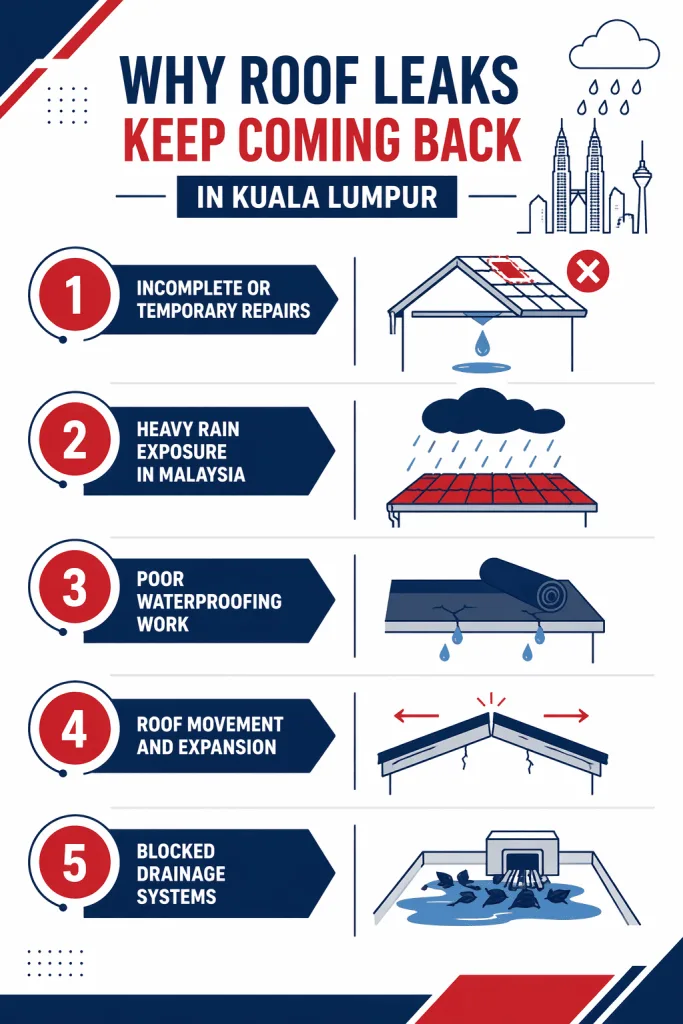
Recurring roof leaks rarely come from a single cause. In most cases, it is a combination of weather exposure, poor workmanship, and incomplete repairs.
1. Incomplete or Temporary Repairs
Many repairs only seal visible damage without fixing the underlying waterproofing failure. When heavy rain returns, the leak reappears.
2. Heavy Rain Exposure in Malaysia
Kuala Lumpur experiences frequent heavy rainfall. Continuous water exposure gradually weakens roof joints, tiles, and metal surfaces.
3. Poor Waterproofing Work
If waterproofing is not applied properly or uses low quality materials, it breaks down faster under heat and rain cycles.
4. Roof Movement and Expansion
Buildings naturally expand and contract due to temperature changes. This creates small cracks that allow water to enter.
5. Blocked Drainage Systems
Poor drainage causes water to pool on the roof, increasing pressure and creating new leakage points.
Common Roof Types Affected in KL Homes
Different roof systems face different leakage risks depending on design and material.
| Roof Type | Common Issue | Risk Level |
|---|---|---|
| Clay Roof Tiles | Broken or shifted tiles | High |
| Concrete Roof | Surface cracking | High |
| Metal Deck Roofing | Rust and joint leakage | Very High |
| Flat Roof Systems | Water ponding | Very High |
This is why proper inspection is needed before any repair work begins.
How Roofing Experts Diagnose the Real Problem
Professional contractors follow a structured inspection process to ensure accurate diagnosis.
Step 1: Roof Inspection
Checking tiles, joints, flashing, and drainage points.
Step 2: Moisture Detection
Using specialised tools to locate hidden water paths under surfaces.
Step 3: Structural Assessment
Identifying cracks, weak points, and movement gaps in the roof structure.
Step 4: Root Cause Analysis
Determining whether the issue is waterproofing failure, drainage problems, or structural damage.
Why DIY Roof Repairs Often Fail
Many homeowners attempt quick fixes using sealants or patching products. However, these solutions are usually temporary.
Common problems with DIY repairs include:
- Incorrect identification of the leak source
- Use of non-industrial sealants
- No waterproofing system restoration
- Ignoring structural cracks
- No pressure testing after repair
Without professional tools and expertise, leaks often return after the next heavy rainfall.
Professional Roof Leak Repair Methods
Experienced teams like Cisco Waterproofing use long-term roof leak repair Kuala Lumpur solutions designed to prevent recurring issues.
1. Full Waterproofing System Reapplication
Restoring protective layers to prevent future water penetration.
2. Roof Tile Replacement and Realignment
Fixing displaced or broken tiles to restore proper roof coverage.
3. Metal Deck Sealing and Anti Rust Treatment
Sealing joints and treating corrosion in industrial roofing systems.
4. Crack Injection and Structural Sealing
Repairing deep concrete cracks to stop internal water seepage.
5. Drainage Improvement Work
Ensuring proper water flow to reduce pooling and pressure buildup.
Why Professional Repairs Last Longer
Professional roof repair focuses on solving the root cause instead of applying temporary fixes.
Key benefits include:
- Accurate diagnosis using professional equipment
- Industrial grade waterproofing materials
- Long term structural protection
- Resistance to heavy rainfall conditions
- Lower risk of recurring leaks
This is especially important in Kuala Lumpur where weather conditions accelerate roof deterioration.
When You Should Call a Roofing Specialist
You should arrange an inspection immediately if you notice:
- Water stains on ceilings or walls
- Dripping during heavy rain
- Mold or damp smells indoors
- Peeling paint near ceiling areas
- Loose or shifted roof tiles
Early action helps prevent expensive structural repairs later.
Stop Roof Leaks Before They Return
Get professional roof inspection and long term repair solutions today.
Conclusion
Roof leaks in Kuala Lumpur homes often return because the root cause is not properly addressed. Temporary fixes may stop water for a short time, but without professional roof leaking repair KL, the issue will continue.
Understanding the real causes and using expert roofing solutions ensures long-term protection for your property.
With proper diagnosis and repair services from specialists like Cisco Waterproofing, homeowners can prevent recurring leaks and maintain a durable, weather-resistant roof.
FAQs
Why does my roof leak only during heavy rain in KL?
Most roof leaks only appear during heavy rain because water pressure increases and exposes weak points such as cracked tiles, poor waterproofing, or loose metal joints.
How do I know if my roof leak is serious?
If you notice ceiling stains, dripping water, mold growth, or repeated leaks in the same area, it indicates a serious underlying roofing or waterproofing issue.
Can roof leaks be repaired without replacing the whole roof?
Yes, most roof leaks can be repaired without full replacement if the damage is localized and properly diagnosed by professional roofing specialists.
How much does roof leak repair cost in Kuala Lumpur?
The cost depends on the roof type, damage severity, and repair method. Minor repairs are affordable, while structural or waterproofing failures cost more.
Why does my roof leak keep coming back after repair?
Recurring leaks usually happen due to improper repair work, untreated root causes, or missing waterproofing layers. A full inspection is needed to fix it permanently.